

『Oil Flow Meter ANSI 600: Rugged Demands for High-Pressure Distribution Networks』Related information(flow rotameter|digital flow meter|balo meter|hydraulic flow meter|volumetric meter|positive displacement meter|pitot tube flow meter|displacement meter|cfm meter|variable area flow meter|inline flow meter|differential pressure flow meter|calibrated flow meter|velocity meter|paddle wheel flow meter|oval gear flow meter|anemometer hvac|multiphase flow meter|doppler flow meter|thorpe tube flowmeter|heat flow meter)
Oil Flow Meter ANSI 600: Rugged Demands for High-Pressure Distribution Networks
Quick Answer: For high-pressure crude oil, condensate and fuel oil distribution lines with ANSI 600 flanges, you need a flow meter that handles up to 99 bar design pressure and tough field conditions. Silver Instruments supplies Coriolis mass flow meters and oval gear meters that fit ANSI 600 connections from DN15 to DN150, with direct mass flow output and optional ATEX Zone 1 certification. Tell us your pipe size, pressure, temperature and flow range and we will recommend a metering solution that lasts without frequent calibration.
Oil distribution networks operating at ANSI Class 600 are not like ordinary process lines. A typical petroleum product pipeline from a tank farm to a loading gantry runs at 50 to 80 bar, with temperature swings from 10 °C to 80 °C. The fluid can be light crude (5 cP), residual fuel oil (300 cP at 50 °C), or condensate with traces of water and sand. Flow ranges often span 500 to 50,000 kg/h. In these conditions a standard flow meter with wetted O-rings or a thin disc will fail within months. We have seen this on customer sites many times.
The Meter Must Survive Before It Can Measure
An ANSI 600 flange connection means the bolted joint must hold against a design pressure of 99 bar at ambient and around 70 bar at 200 °C. But pressure is only one part. The flow meter body and sensor must resist pulsation from positive displacement pumps, occasional slug flow, and abrasive sand fines. If you choose an inline Coriolis mass flow meter, the twin tube design actually dampens pulsation thanks to its stiff oscillator. Silver Instruments Coriolis meters come with 316L stainless steel or Hastelloy C22 wetted parts, and a secondary containment tube rated to the same pressure. No bypass, no separate flow conditioner. In practice, an engineer replaces a DP cone meter with our SIL-CORIO DN50 ANSI 600 model and gets stable mass flow, density and temperature readings within ±0.15% accuracy over a 15:1 turndown.
Why Many Operators Skip Turbine Meters for Heavy Oil
High-viscosity heavy fuel oil (380 cSt at 50 °C) is common in power plant distribution and bunker fuel transfer. Turbine meters suffer from viscosity shifts and need constant K-factor corrections. Oval gear positive displacement meters are a better fit. Our oval gear flow meter with ANSI 600 rating measures up to 2,000 L/h, handles solids up to 50 microns when paired with a strainer, and holds ±0.5% linearity. Because the gear pair is hard-coated, you get 3 to 5 years of service before recertification. A customer in a port terminal in Vietnam uses eight of these on fuel oil loading bays, and the only maintenance is cleaning strainer baskets every two months.
What to Look for in a Hazardous Area Transmitter
Oil distribution nodes are almost always classified Zone 1 or Division 1. Silver Instruments meters integrate ATEX II 2G Ex d ia IIC T4 certified transmitters, or IECEx for markets in Australia and the Middle East. The output signals are 4-20 mA HART, Modbus RTU, and pulse, directly connected to the remote terminal unit. No external isolator needed. We also keep the terminal compartment generous so a field technician can wire with gloves on. Because the meter body handles the full pressure, the transmitter housing only needs IP67 sealing, which simplifies certification renewals. Here is the thing: commissioning is faster when the transmitter is already pre-configured with your flow range and units
Real Site Data: Crude Oil Transfer Line in Southeast Asia
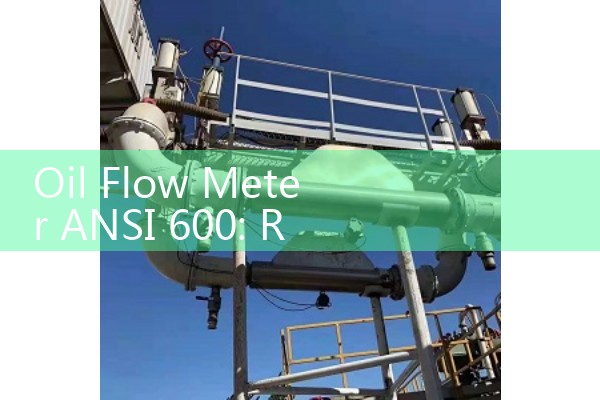
Last year a crude oil trader in Indonesia needed a meter for a DN80 ANSI 600 transfer line between storage and a small refinery. The oil had 1% water, API gravity 30, viscosity 12 cP at 50 °C, and flow of 15,000 kg/h. The customer had tried an ultrasonic clamp-on meter but signal dropped whenever the pipe wall temperature rose above 70 °C. We supplied a Coriolis meter DN50 (reduced to raise velocity and keep pressure drop below 0.5 bar) with inline density measurement. The package was shipped with a factory calibration certificate traceable to ISO 17025. After one year, the meter still holds zero and shows no erosion. This is exactly the type of application where an ANSI 600 rated meter pays for itself by cutting custody transfer disputes.
Which Meter Type Fits Your Application
If you measure crude oil with custody transfer accuracy (±0.1% or better) and need density, choose a Coriolis mass flow meter. If you measure heavy fuel oil and care about cost per point, oval gear meters are robust and much simpler to maintain. Both can be built with ANSI 600 RF flanges per ASME B16.5. For light condensate and liquefied petroleum gas flows that need high pressure and low flow cut sensitivity, a helical gear meter or a Coriolis with a secondary containment rupture disk works well. Silver Instruments does not sell one-size-fits-all. We match the sensor material and bearing design to your actual fluid report.
Frequently Asked Questions
Q: Can a Coriolis flow meter handle the high pressure of ANSI 600 gas oil lines?
A: Yes. Our standard Coriolis thin-walled tubes are rated to 100 bar at 20 °C. We test each meter hydrostatically at 1.5 times the flange rating. The pressure drop at nominal flow stays below 0.5 bar for DN50 with oil.
Q: Do oval gear meters need a flow conditioner for high-pressure oil?
A: No. Oval gear meters operate by positive displacement. Straight pipe runs are unnecessary. However you must install a Y-type strainer with 40 mesh upstream when dealing with residual fuels that carry sediment.
Q: What signal output integrates with existing SCADA systems?
A: 4-20 mA HART (passive or active) with temperature compensation is standard. Modbus RTU, pulse and Namur output are optional. We can pre-set the flow span, alarm thresholds and damping time before shipment.
Q: How long does delivery take for an ANSI 600 oil flow meter?
A: DN15 to DN80 Coriolis meters with ANSI 600 are often in stock or require 3 to 4 weeks for flange assembly and calibration. Larger DN100/DN150 sizes take 6 to 7 weeks. Oval gear meters are available within 2 to 3 weeks.
Q: What information do you need to provide a price?
A: Send us the pipe size (DN), fluid type, operating pressure and temperature, flow range (min and max), and preferred electrical output. Our engineers will recommend the right model and send a complete datasheet with a quotation within one working day.
Silver Automation Instruments has been supplying flow meters to oil and gas operators across Southeast Asia, Latin America, and the Middle East since 2010. We focus on meters that match field conditions, not generic catalogs. For a specific quote for an ANSI 600 oil flow meter, email your parameters to [email protected] or use the inquiry form at flow-meter.com.au. No form letter replies. You deal with an engineer who reads your data.
 Hot Blog
 Related AD