

『Kerosene Flow Meter 5 m3/h Chemical Extraction Line Charts』Related information(flow rotameter|digital flow meter|balo meter|hydraulic flow meter|volumetric meter|positive displacement meter|pitot tube flow meter|displacement meter|cfm meter|variable area flow meter|inline flow meter|differential pressure flow meter|calibrated flow meter|velocity meter|paddle wheel flow meter|oval gear flow meter|anemometer hvac|multiphase flow meter|doppler flow meter|thorpe tube flowmeter|heat flow meter)
Kerosene Flow Meter 5 m³/h for Chemical Extraction Line
Quick Answer
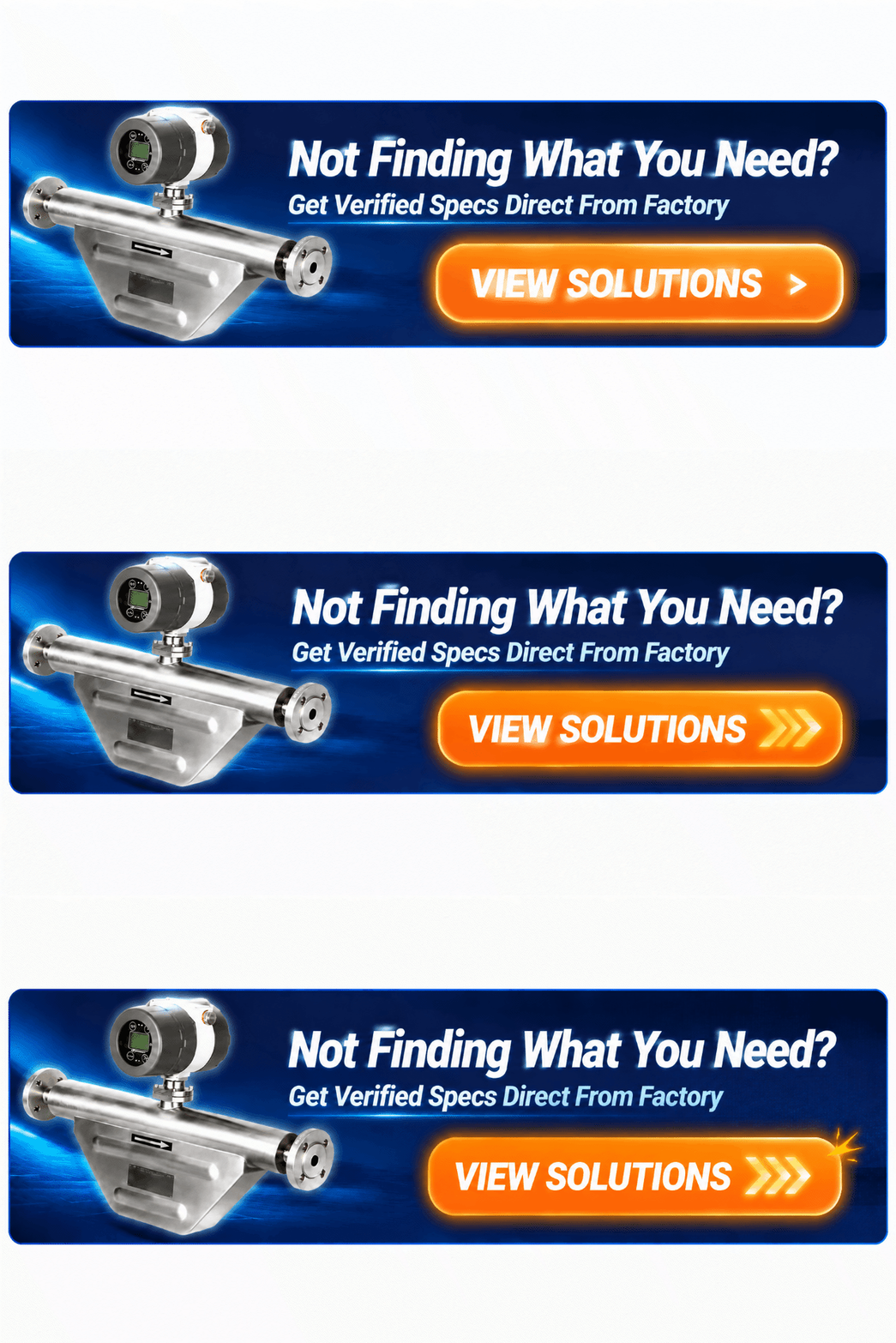
For a kerosene flow of 5 m³/h on a chemical extraction line, a Coriolis mass flow meter gives you direct mass flow, density, and temperature from one instrument. Silver Instruments supplies the SIL-CMF010 Coriolis meter with 4-20 mA HART, ATEX Zone 1 certification, and 316L wetted parts for this exact duty. It handles kerosene viscosity around 2.5 cP and process temperatures to 120 °C with zero moving parts in the flow stream.
Engineers on extraction lines need stable, repeatable flow data to control solvent ratios. Kerosene is often the carrier or wash solvent. A 5 m³/h line is a medium flow rate. You find this in copper solvent extraction plants, edible oil hexane replacement systems, and specialty chemical battery-grade purification steps. The chart you mentioned likely plots back pressure against pipe size, or flow velocity versus pressure drop across a Coriolis meter. We have helped dozens of customers in Southeast Asia and the Middle East size meters for exactly these loops.
Most engineers skip one important step. They look only at the flow rate and forget that kerosene temperature can swing from 25 °C in the morning to 55 °C after the stripping column. A volumetric-only meter like a turbine or oval gear will drift with density changes. Because kerosene density drops roughly 0.7 kg/m³ per °C, a 30 °C rise gives a 2% volume error. Mass flow avoids this. In practice, a Coriolis meter measures mass directly. The reading stays true even if the extraction line runs hot.
We often see DN15 or DN20 process piping on these 5 m³/h lines. The SIL-CMF010 comes with DN15 process connections. It gives a pressure drop below 0.3 bar at 5 m³/h with kerosene. The meter body has no internal obstructions, so solids carryover from the extraction mixer-settler does not plug it. A customer in Vietnam producing paint driers uses this exact size on a kerosene-cobalt extraction line. They replaced a glass tube rotameter and eliminated weekly cleaning downtime.
Here is the thing. A Coriolis meter also outputs density. In a chemical extraction line, the organic phase density tells you whether the solvent is loaded with metal or still lean. You can use the 4-20 mA density signal from the same SIL-CMF010 to control the organic-to-aqueous ratio. No second instrument needed. Silver Instruments pre-configures the meter with kerosene density reference values and a customer-specific flow range. Just wire it to your PLC and set the span.
For hazardous areas, the SIL-CMF010 is available with Ex d IIC T6 Gb certification. We ship to Qatar, Indonesia, Peru, and Nigeria regularly. A chemical distributor in Saudi Arabia runs six units on kerosene/amine extraction lines. They reported zero drift after 18 months. The remote transmitter option with a 10-metre cable keeps the electronics
_600x400.jpg)
If your process chart shows a target line velocity of around 2 to 4 m/s in DN15 pipe, the Coriolis meter fits naturally. The manufacturer’s pressure drop curve for kerosene is nearly flat across 1 to 6 m³/h. A vortex flow meter would need a minimum Reynolds number above 20,000, which you barely hit at low temperatures. An oval gear meter works but wears with any fine solids. The Coriolis wins on maintenance and direct mass output.
Frequently Asked Questions
Q: Can I use a vortex flow meter for 5 m³/h kerosene?
A: You can, but check the minimum flow. At 25 °C kerosene has a low Reynolds number in DN15 pipe. Below 3 m³/h, many vortex meters lose accuracy. Silver Instruments supplies the SIL-VF05 vortex meter with a reduced bore DN12 body that extends the range, giving 1.5 to 10 m³/h in kerosene. But if the line temperature varies, mass flow is still better.
Q: Do I need ATEX certification for a chemical extraction line?
A: In most refineries and solvent extraction plants, Zone 1 or Zone 2 rating is mandatory. Kerosene vapours create a Group IIA explosive atmosphere. The SIL-CMF010 with Ex d IIC T6 Gb covers this. Always specify Zone 1 for mixer-settler areas.
Q: How do I read the line chart for pressure drop?
A: The chart typically gives pressure drop in bar on the Y axis against flow rate in m³/h on the X axis. For kerosene at 5 m³/h through a DN15 Coriolis tube, expect around 0.25 bar. If your available pump head is low, share your piping isometrics with us. We can select a twin-tube Coriolis with lower pressure loss.
Q: What output signals work with a chemical plant DCS?
A: The SIL-CMF010 transmitter comes standard with 4-20 mA HART for flow, another 4-20 mA for density, and a pulse output for totalization. The HART signal allows remote diagnostics. Modbus RS485 is an option. We configure all outputs before shipment.
Q: What is the lead time and support?
A: Silver Instruments keeps the SIL-CMF010 in stock in our Singapore warehouse. Typical delivery to Indonesia, Thailand, or Mexico is 7 to 10 days by air. We provide commissioning support via WhatsApp video call. Send us your pressure (bar), temperature (°C), pipe size (DN), and flow range. We return a full datasheet with the pressure drop chart overlaid for your operating point.
Because kerosene is the lifeblood of many extraction circuits, your meter choice directly affects product purity and solvent loss. A direct mass reading removes the guesswork of temperature compensation. Silver Instruments has been supplying flow meters to chemical extraction projects since 2012. Our technical team sizes the meter, checks the piping layout, and stays with you during startup. No generic call centre, just application engineers who understand solvent extraction.
 Hot News
 Related AD