

『Tracking Respiratory Health Using Average Peak Flow Meter Readings』Related information(flow rotameter|digital flow meter|balo meter|hydraulic flow meter|volumetric meter|positive displacement meter|pitot tube flow meter|displacement meter|cfm meter|variable area flow meter|inline flow meter|differential pressure flow meter|calibrated flow meter|velocity meter|paddle wheel flow meter|oval gear flow meter|anemometer hvac|multiphase flow meter|doppler flow meter|thorpe tube flowmeter|heat flow meter)
Tracking Respiratory Health Using Average Peak Flow Meter Readings
Quick Answer: Average peak flow meter readings give a clear trend of airway openness over weeks and months, not just a single blow. Consistent daily logging helps doctors adjust medication before symptoms get bad. For medical OEMs building these meters, the reference flow standard comes from industrial thermal mass flow meters calibrated in L/min at ambient temperatures.
Peak flow meters measure how fast a person can push air out of the lungs. That number is called peak expiratory flow, or PEF, and is shown in liters per minute. Most adults blow between 400 and 700 L/min. Children fall in a lower band, often 150 to 400 L/min, depending on height, age, and sex. A single reading in the clinic tells a doctor something. But daily morning and evening readings recorded at home tell a much bigger story when averaged over time.
Here is the thing. One low reading may happen because the patient did not seal the mouthpiece properly, or coughed mid blow. A weekly average smooths out that noise. Doctors in Malaysia, South Africa, and Chile who manage asthma in large populations ask patients to log three blows each session and record the highest value. Then the monthly mean of those daily bests gets plotted. If the average drops by more than 15 percent from a personal best baseline, it is a signal to step up the control plan. This is not just theory. We have seen this on customer sites where device makers require repeatable measurement traceability down to the unit level.
How a Peak Flow Meter Gets Its Accuracy
A handheld peak flow meter is a variable area flow meter with a spring loaded piston or a rotating vane. The scale printed on the body is not guessed at the factory. It comes from a multi point calibration against a reference flow standard that itself is traceable to a national metrology institute. That reference standard is usually an industrial thermal mass flow meter or a laminar flow element coupled to a high precision differential pressure sensor. The reference setup reads direct mass flow in kg/h, then the calibration software converts it to volumetric flow in L/min at 21 degrees C and ambient pressure.
Most engineers skip this part, but the conversion from mass to volume matters a lot in a hot calibration lab in Ho Chi Minh City or Guadalajara. Because air density changes with temperature and barometric pressure, the reference meter must have built in temperature compensation. A PT100 sensor embedded in the flow body feeds real time gas temperature to the transmitter. The transmitter calculates volumetric flow internally. Without that, a peak flow meter calibrated on a 35 degree C afternoon would read different in a 20 degree C clinic. Many medical device assembly lines in Southeast Asia now require their reference flow meters to output 4-20 mA HART signals with a stated accuracy of plus minus 0.5 percent of reading across a range of 20 to 800 L/min. That is exactly the kind of instrument Silver Automation Instruments supplies.
Silvering the Gap: Industrial Flow Instruments in Respiratory Device Production
Silver Instruments does not sell medical peak flow meters to end users. But we work directly with manufacturers who produce respiratory monitoring tools for hospitals and home care. A
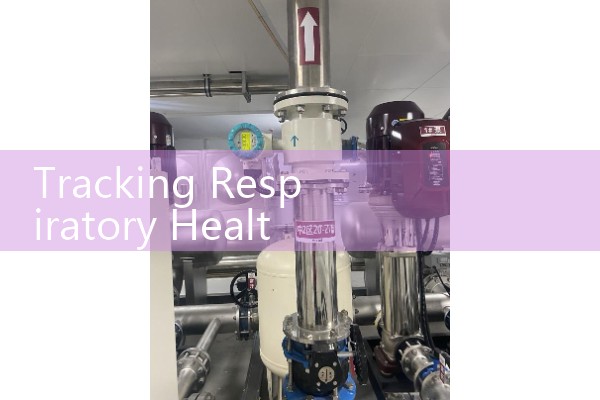
So yes, tracking respiratory health with average peak flow meter readings depends on every single device leaving the factory within plus minus 10 L/min or plus minus 5 percent of reading, whichever is greater. That level of consistency comes from the reference flow meter on the calibration bench.
Frequently Asked Questions
Q: How do average peak flow meter readings help manage asthma?
A: Daily averages reveal slow declines in airway function that single spot checks miss. If a seven day average trends downward, a physician can increase inhaled corticosteroid dose before a severe attack happens. This is standard practice in chronic respiratory care across the Middle East and Latin America.
Q: Which industrial flow meter works best for calibrating peak flow meters?
A: A thermal mass flow meter with gas temperature compensation is the most practical choice. It handles 20 to 800 L/min with low pressure drop and outputs a stable 4-20 mA signal. Some labs also use Coriolis mass flow meters for very low flow validation, but thermal is more common for air and O2 ranges.
Q: Can Silver Instruments supply flow meters for medical device production lines?
A: Yes. We supply industrial thermal mass flow meters and compact pressure transmitters used in calibration rigs and leak test stations. We regularly ship to OEMs in Malaysia, Thailand, Mexico, and Nigeria. Just specify the gas type, flow range in L/min or kg/h, pipe size DN, and required output signal.
Q: What accuracy is needed for a peak flow meter reference standard?
A: In practice, plus minus 0.5 percent of reading at 100 to 800 L/min is accepted by most regulators. The reference meter should be re calibrated every 12 months with traceable equipment. We provide a full calibration certificate with every instrument.
Q: Do you offer ATEX rated flow meters for oxygen enriched environments?
A: We can supply ATEX Zone 1 rated thermal mass flow meters for gas mixtures that require explosion proof housings. Contact our team with your oxygen concentration and ambient conditions.
Get a quote for your calibration bench. Send us your gas type, flow range, pipe size DN, and required accuracy. Our engineers will propose a ready to install flow meter with traceable certification. Email: [email protected]. Tel: +86-25-68650347. Whatsapp: +86-25-52155837. WeChat: +86 15365082610. Visit Silver Automation Instruments for full specs on thermal mass, Coriolis, and pressure transmitters suitable for medical device testing.
 Hot Blog
 Related AD