

 Current position > Product detail
『Well Flow Meter: Monitoring Deep Well Submersible Pump Output』Related information(flow rotameter|digital flow meter|balo meter|hydraulic flow meter|volumetric meter|positive displacement meter|pitot tube flow meter|displacement meter|cfm meter|variable area flow meter|inline flow meter|differential pressure flow meter|calibrated flow meter|velocity meter|paddle wheel flow meter|oval gear flow meter|anemometer hvac|multiphase flow meter|doppler flow meter|thorpe tube flowmeter|heat flow meter)
Well Flow Meter: Monitoring Deep Well Submersible Pump Output
Quick Answer: A well flow meter measures how much water a deep well submersible pump actually delivers. It catches pump wear, impeller damage, or falling water tables before you lose production. For most boreholes from DN25 to DN200, an electromagnetic flow meter with remote GSM data logging gives the most dependable long-term solution.
Why Measure Submersible Pump Output
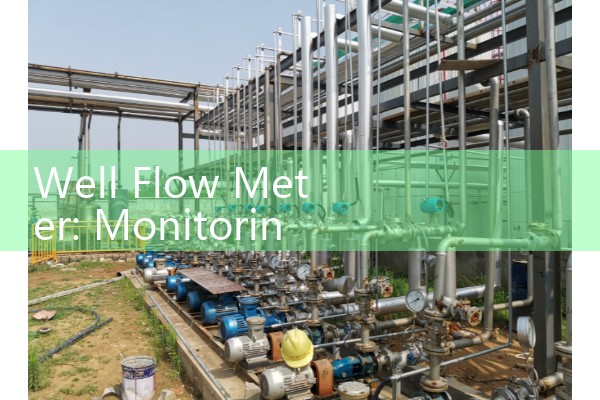
Deep well pumps sit 80 metres underground, sometimes 300 metres. You cannot see them. You cannot hear them. You only know there is a problem when the storage tank runs dry or the motor burns out. A flow meter at the well head shows you exactly what the pump is doing right now. A drop from 12 m3/h to 9 m3/h after six months often means the impeller is worn or the screen is clogged. Without a meter you find out next season when the crop is already stressed. Engineers in Australia, Kenya, and Chile use well flow meters to schedule pump maintenance, not emergency repairs.
Most groundwater pumps run 18 to 22 hours a day. Operators check a local LCD display once per shift, or better, receive a daily totalized volume via GSM telemetry. This is not about laboratory accuracy. It is about trend. A 2% drop repeated over three weeks is a real signal. A good well flow meter makes that signal hard to miss.
Which Flow Meter Technology Fits a Deep Well
Three technologies dominate well head measurement: electromagnetic, clamp-on ultrasonic, and inline turbine. Each has a clear use case. We have seen all three installed incorrectly enough times to know what works long term.
Electromagnetic flow meters are the first choice for boreholes with conductive water above 20 µS/cm. They have no moving parts. Nothing to snag on sand or iron oxide. A full-bore mag meter with hard rubber liner and stainless steel electrodes handles sediment well. Common sizes are DN25, DN40, DN50, and DN80. Most well pumps operate at low pressure, 4 to 10 bar, so a standard PN16 flanged or threaded mag meter is fine. Output is typically 4-20 mA plus pulse for totalizing, with an optional RS485 Modbus link to a remote RTU. Silver Instruments supplies compact mag meters with IP68 remote sensors for installations inside a buried pit. When a customer in Peru asked us about a well 120 m deep with high iron content, we recommended an electromagnetic meter with Hastelloy electrodes because standard 316L electrodes pitted within eight months.
Clamp-on ultrasonic flow meters make sense when cutting the pipe is not allowed or when the line is large, say DN150 or bigger. They strap onto the outside of PVC, steel, or ductile iron pipe. Accuracy depends on pipe wall condition and straight run. For well water, we suggest 10 diameters straight upstream and 5 downstream. Clamp-on meters need a clean external surface and proper coupling gel. They are popular for temporary audits or shared borehole schemes in Namibia and Botswana where multiple users share one pump and need allocation metering. The practical limit is about 1% of reading at best, but installation often limits repeatability to 2%.
Inline turbine flow meters are cheap and easy to install but wear fast. Sand, scale, and rust from the well casing chew up bearings and turbine blades. We have seen turbines fail after nine months in sandy boreholes in the Philippines. If the water is very clean and the pump runs only a few hours a day, a turbine meter with a removable insert can work. But for continuous use, the maintenance cost quickly erases the low purchase price.
Key Installation Details That Affect Readings
Installing a well flow meter sounds simple: bolt it in the discharge line after the check valve. Real sites are not that clean. Here are the details that change numbers.
Straight pipe run. Most electromagnetic flow meters need 5 diameters upstream and 3 downstream. A submersible pump discharge often elbows immediately. Place the meter after the first straight section above ground, not right against the well head flange where turbulent jetting destroys the velocity profile.
Full pipe. A flow meter must see a completely full pipe. In a well line this is normally true after the check valve, but if the pipe slopes downhi
Grounding and noise. Submersible pumps with VFD drives generate electrical noise. Always ground the flow meter sensor separately per the manufacturer drawing. Use shielded signal cable. If the pump VFD is within 3 metres of the meter, add a ferrite core on the signal line. In one installation in Ghana, a mag meter signal jumped every time the solar inverter switched to battery. Proper grounding and a 100 ms damping setting fixed it.
GSM data logging. For remote sites, we supply battery-powered GSM data loggers that send flow total and alarm thresholds once per day via 4G. A farmer in Morocco checks totalized cubic metres from yesterday on a mobile phone dashboard before deciding whether to run the pump extra hours. No SCADA, no laptop needed.
A Real Well Flow Measurement Setup
Last year a groundwater monitoring project in Queensland, Australia needed to measure output from three submersible pumps spaced across a 40-hectare farm. Each pump was 100 m deep, DN50 discharge, typical flow 8 m3/h at 6 bar. The water had conductivity around 800 µS/cm and occasional fine sand. We supplied three Silver Instruments SE series electromagnetic flow meters, DN50, PN16, with EPDM liner and 316L electrodes. Each meter was fitted with an IP68 remote mount converter because one well head was inside a concrete pit that flooded during the wet season. A small GSM data logger next to each converter pushed daily totals and any low-flow alarm to the farm manager phone. After 14 months the meters show stable readings with no drift. The farm owner caught a pump impeller issue two weeks before visible pressure drop because the flow trend dipped 15 percent.
Specifying Your Well Flow Meter: What to Tell Us
When you ask for a quotation, we need five pieces of information to get the right meter the first time. Pipe size (DN). Water quality basics: is it potable, brackish, or high in iron? Maximum and normal flow rate in m3/h. Pump discharge pressure in bar and ambient temperature range. Power and signal output preference, such as 24 VDC with 4-20 mA plus pulse, or battery-operated with Modbus. Based on these we recommend a specific model and send a dimensional drawing within one working day.
For a quick quote, reach Silver Automation Instruments at email [email protected] or call Tel +86-25-68650347. You can also message us on Whatsapp +86-25-52155837 or WeChat +86 15365082610. We ship well flow meters from stock in sizes DN10 to DN300 to clients across Australia, Southeast Asia, Africa, the Middle East, and Latin America.
Frequently Asked Questions
Can I use an electromagnetic flow meter for a deep well with low conductivity water? Most groundwater has conductivity above 100 µS/cm, which is enough. If the water is demineralized or very pure rainwater, a mag meter may not work. We test conductivity first or switch to a clamp-on ultrasonic meter.
How often does a well flow meter need calibration? Electromagnetic meters with no moving parts typically hold calibration for three to five years. We recommend an annual verification with a reference meter on site. Turbine meters need recalibration every year if used continuously.
What is the smallest flow a well flow meter can detect? For a DN50 electromagnetic meter, the low flow cutoff is typically around 0.2 m3/h. Below that the meter reads zero. This is a parameter you set during commissioning to avoid false readings when the pump is off.
Can the flow meter survive a flooded pit? Yes if you specify an IP68 remote sensor and an IP67 or IP68 converter. We have dozens of meters installed in pits that fill with water during the rainy season. They keep working submerged for weeks.
Do I need ATEX or IECEx certification for a water well flow meter? Usually not, because groundwater is not explosive. If the pump is in an area with methane gas risk, such as a landfill monitoring well, then we supply ATEX Zone 2 certified meters. Most clean water wells use standard industrial meters.