

 Current position > Product detail
『Soybean Oil Flow Meter DN150: Managing Massive Volume Streams in Deodorizing Towers』Related information(flow rotameter|digital flow meter|balo meter|hydraulic flow meter|volumetric meter|positive displacement meter|pitot tube flow meter|displacement meter|cfm meter|variable area flow meter|inline flow meter|differential pressure flow meter|calibrated flow meter|velocity meter|paddle wheel flow meter|oval gear flow meter|anemometer hvac|multiphase flow meter|doppler flow meter|thorpe tube flowmeter|heat flow meter)
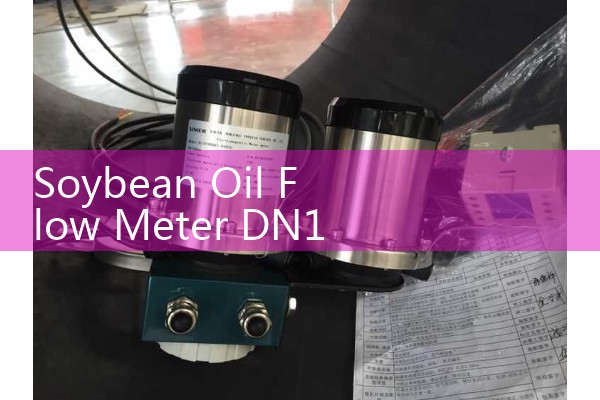
Soybean Oil Flow Meter DN150: Managing Massive Volume Streams in Deodorizing Towers
Quick Answer: A DN150 Coriolis mass flow meter from Silver Automation Instruments measures soybean oil flow in deodorizing towers directly in mass units (kg/h) at 0.1% accuracy, with no need for straight pipe runs. This meter handles 250 °C process temperatures and flow rates up to 500,000 kg/h, preventing batch losses caused by density shifts during high-vacuum steam stripping. The 4-20 mA HART output and ATEX Zone 1 approvals suit Southeast Asian and Middle Eastern edible oil refiners who demand custody-transfer-level data from a single sensor.
Most engineers skip a critical detail when they size a soybean oil DN150 line for a tower. The oil leaves the deodorizer at 240 °C and drops to 45 °C after the heat exchangers. Density swings of 12% happen inside that thermal span. A volumetric meter reads those swings as a flow error. A Coriolis meter does not. It gives kilograms per hour independent of the fluid temperature. We have seen this on customer sites many times. A refinery in Vietnam ran a turbine meter on a DN150 line for six months. The mass balance closed only within 3.5% every shift. After they swapped the meter for our DN150 Coriolis, the unaccounted oil dropped to 0.25% per batch.
The deodorizing tower operates under 3 mbar absolute pressure. Steam strips free fatty acids and odor compounds. The soybean oil moves at 300,000 kg/h through a DN150 pipe, often Schedule 40 stainless steel. Getting reliable flow data at that throughput is not a generic sensor job. Here is the thing. A magnetic flow meter cannot work. Soybean oil is non-conductive. A vortex meter picks up steam hammer pulsations from the vacuum system and generates false peaks. A turbine meter suffers bearing wear when hot oil runs dry between campaigns. Most plants in South America and Africa have learned this the hard way. They come to us asking for a single transmitter that gives mass flow, density, and temperature in one loop.
Our DN150 Coriolis flow meter uses dual bent tubes in 316L stainless steel, with PT100 sensors embedded directly in the flow path. The meter body has no moving parts. The wetted material is fully traceable to EN 10204 3.1 certificates. The transmitter outputs 4-20 mA HART plus a Modbus RTU channel. You can pull density values live and use them to control the stripping steam ratio. The local display shows mass flow, density, and temperature simultaneously. All this runs on a single 24 VDC supply. Because the meter is ATEX Zone 1 and IECEx certified, it fits right into a solvent-laden deodorizer bay without extra purging hardware.
DN150 covers the volume range that mid-size refineries need. They process 200 to 600 tonnes of soybean oil per day. The meter turndown reaches 20:1. You get accurate readings from 25,000 kg/h up to 500,000 kg/h. The pressure drop stays below 0.4 bar at maximum flow. Oil viscosity at 240 °C hovers around 1.2 cP. The sensor does not choke even when the pump starts against a cold line. Last year a customer in Malaysia specified this exact size for a new physical refining line in Port Klang. Their process engineer sent us the running conditions: 3.8 bar inlet pressure, 255 °C, and a required accuracy better than 0.2% over the full batch cycle. We shipped a DN150 meter with Hastelloy C22 wetted parts for extra acid resistance because the crude soybean oil sometimes carried residual phosphoric acid. The commissioning took three hours. The plant achieved mass balance closure below 0.15% from the first week.
Sizing a DN150 Soybean Oil Flow Meter: Parameters That Matter
In practice, these are the data points we ask for. Pipe size is DN150 but that is only the start. Tell us the normal flow rate (for example 280,000 kg/h), the maximum flow (420,000 kg/h), and the minimum flow during start-stop cycles (maybe 15,000 kg/h). Operating temperature matters because the meter body expands. Pressure matters because backpressure on the deodorizer discharge affects the required flange rating. Most sites use PN 16 or PN 25 flanges, but some Latin American plants specify 300 l
Why not a volumetric meter on DN150 deodorizer lines?
Volumetric meters output cubic metres per hour. You need a separate density meter and a flow computer to derive mass. That chain adds uncertainty. In a deodorizer, any mass error directly affects the batch oil loss figure. A positive displacement meter with oval gears works on cold oil but not at 250 °C. The gears expand, the clearances change, and the slip flow increases. That is why most refiners replace PD meters within the first two years. A Coriolis meter has no slip paths. You measure mass directly.
Installation advantages on existing DN150 piping
A Coriolis meter of this size likes a straight pipe but tolerates minor bends. We normally recommend 5 diameters upstream and 2 downstream, which is far shorter than the 30 DN that a vortex meter demands. In a crowded deodorizer mezzanine, that distance saves real estate. You can mount the meter in horizontal or vertical orientation. For soybean oil with its negligible solids, we suggest the horizontal mounting with the tubes facing downward so any trapped steam bubbles can escape during startups. The electronics are remote mounting capable up to 100 metres. That helps when the transmitter needs to sit in a non-hazardous control room while the sensor stays in Zone 1.
The meter body supports CIP and SIP cycles. After a production run, operators circulate hot caustic solution through the DN150 line at 90 °C. The 316L meter body handles up to pH 12 without corrosion. No gaskets inside the flow path mean no places for soap residues to lodge. A dairy plant in Australia uses our same Coriolis series on a DN80 line for milk concentrate. They have validated zero cross contamination. Soybean oil refiners adopt the same argument when they seek a meter for both crude and fully refined oil streams.
FAQ
1. Can a magnetic flow meter handle soybean oil at 250 °C?
No. Soybean oil is an electrical insulator. Magnetic flow meters require a conductive liquid with minimum 5 µS/cm. Raw oil conductivity stays below 0.01 µS/cm, so the meter generates no signal.
2. What accuracy does a DN150 Coriolis meter achieve on deodorized oil?
Our standard specification is 0.1% of rate for mass flow above 20% of full scale. On a 500,000 kg/h meter, that means ±500 kg/h or better. Field data from a soybean oil refinery in Brazil showed repeatability at 0.05% during continuous 72-hour runs.
3. Which certifications does Silver Instruments provide for DN150 oil flow meters?
Every meter ships with a factory calibration certificate. Optional third-party certificates from TÜV or SGS cover material traceability and pressure testing. Hazardous area certificates include ATEX Ex ia IIC T4 Ga/Gb and IECEx equivalents. We also provide a Declaration of Conformity for the EU Pressure Equipment Directive.
4. How do I get a price quote for a DN150 soybean oil flow meter?
Send us your pressure (bar), temperature (°C), pipe size (DN), and flow range. Tell us the flange standard (ANSI, DIN, JIS). We reply within one working day with a complete commercial offer including freight to your country.
5. Is the meter compatible with 4-20 mA HART and plant DCS systems?
Yes. The standard transmitter sends 4-20 mA HART for mass flow and optional passive pulse output. Digital communication ports Modbus RTU and HART 7 run in parallel. We have tested interoperability with Yokogawa, Emerson, and Siemens DCS platforms across sites in Thailand and Nigeria.
Tell us your process parameters for a meter sizing report. Write to Silver Instruments with the operating pressure, temperature, desired accuracy, and connection flange standard. We will return a data sheet for a DN150 Coriolis flow meter within 24 hours. This is a specific instrument for a demanding tower loop, not a catalogue pick.