

 Current position > Product detail
『Definition of Flow Meter: Scientific and Practical Explanations of Fluid Senses』Related information(flow rotameter|digital flow meter|balo meter|hydraulic flow meter|volumetric meter|positive displacement meter|pitot tube flow meter|displacement meter|cfm meter|variable area flow meter|inline flow meter|differential pressure flow meter|calibrated flow meter|velocity meter|paddle wheel flow meter|oval gear flow meter|anemometer hvac|multiphase flow meter|doppler flow meter|thorpe tube flowmeter|heat flow meter)
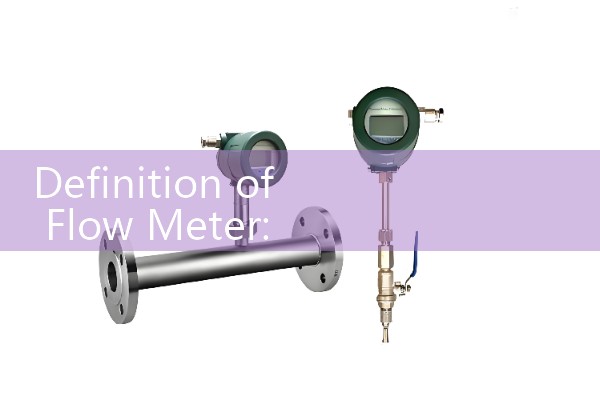
Definition of Flow Meter: Scientific and Practical Explanations of Fluid Senses
Quick Answer: A flow meter is a device that senses fluid motion and translates it into a usable output. This output may be a 4-20 mA signal, a pulse, a digital reading in kg/h, or a volume total on a display. Silver Automation Instruments engineers these meters for demanding conditions such as viscous oils, corrosive chemicals, and high-pressure steam, not just clean water in a lab.
Engineers and procurement managers often ask for a simple definition that still captures the real world. The scientific side is about fluid senses. A flow meter detects how a fluid moves, how fast, how much mass or volume passes a point. It could sense velocity via ultrasonic transit time, detect vortex shedding frequency, or measure the Coriolis force generated by mass flow. That is the scientific layer.
The practical side is what happens in a plant. A flow meter must survive vibration, temperature swings, and aggressive media. It must deliver a signal the PLC or DCS can trust. We see this every day at customer sites across Southeast Asia, the Middle East, and Latin America.
Take a seawater desalination plant in Oman. The operator needed to monitor brine flow to the reverse osmosis array. The pipe was DN150, medium had conductivity around 45,000 µS/cm, and the ambient temperature reached 55 °C. We supplied an electromagnetic flow meter with a PTFE liner and Hastelloy C electrodes, outputting 4-20 mA HART to the DCS. This practical choice avoided electrode corrosion and gave stable readings within ±0.5% of rate. That is what we mean when we define a flow meter as an industrial instrument, not just a sensor.
Another practical scenario: a paint factory in Vietnam uses oval gear flow meters for dosing solvents with viscosity up to 500 cP. Positive displacement meters sense discrete pockets of fluid. The gears rotate, each pocket is a known volume. The pulse output goes to a batch controller. Simple, repeatable. The factory runs three shifts and needs minimal maintenance. They have used our oval gear meters for four years without drift. These details matter when you think about flow meter definition in an operational budget meeting.
In the oil and gas sector, Coriolis mass flow meters directly sense mass flow and density. No need for temperature and pressure compensation when measuring fuels. A terminal in Nigeria uses our Coriolis meter, size DN25, to measure diesel transfer at 1200 kg/h with custody transfer accuracy of ±0.1%. The meter sends Modbus RTU data to the site SCADA. The definition of flow meter here includes multiparameter sensing: mass flow, density, and temperature in one device.
Steam measurement presents its own challenges. A food processing plant in Argentina needed to measure saturated steam at 8 bar and 175 °C for a sterilizer. We recommended a vortex flow meter with an integrated PT100 temperature sensor and a pressure transmitter. The system computed mass flow of steam via compensation, outputting 4-20 mA. The vortex meter senses the frequency of vortices shed by a bluff body. That frequency is proportional to flow velocity. This scientific principle, combined with practical compensation, gave the plant accurate steam consumption data for energy management.
Our thermal mass flow meters handle compressed air and natural gas. They sense the cooling effect on a heated sensor. For a compressed air audit in a Malaysian electronics factory, we installed inline thermal meters, DN50 and DN80, with local displays showing Nm³/h. This helped the plant identify leaks and save 15% on electricity. Practical, immediate value.
Buyers often ask for a flow meter definition that includes support. Silver Automation Instruments does not just ship a box. We help with selection. We ask for your fluid name, pressure in bar, temperature in °C, pipe size DN, flow range, and hazardous area classification such as ATEX Zone 1 or Class 1 Div 2. Send us these details. We reply with a data sheet and a quotation within one working day.
We stock and manufacture a wide range: electromagnetic, Coriolis, ultrasonic, vortex, oval gear, and thermal mass flow meters. Our pressure transmitters and paperless recorders complete the package. Customers in regions like Australia, Saudi Arabia, Chile, and Indonesia depend on our fast response.
Here is the thing: a flow meter definition is not static. It evolves with the fluid, the process, and the data needs. Most engineers skip the textbo
For example, our ultrasonic flow meters include clamp-on models. They sense flow from outside the pipe using transit-time difference. This avoids cutting into existing lines. A water utility in the Philippines used our clamp-on meters on DN200 cement-lined ductile iron pipes to verify pump efficiency. Quick deployment, no shutdown.
Pressure transmitters complement flow meters. They sense the static pressure of the fluid. Combined with a flow meter, you can calculate mass flow of gases or detect filter clogging. We offer 4-20 mA HART pressure transmitters with ranges from -1 to 1000 bar. Many flow loops in chemical plants in the Middle East use our transmitter together with a vortex or Coriolis meter.
Paperless recorders capture data from multiple flow meters. They act as a black box, logging totalized flows, alarms, and temperature. A dairy in Brazil uses our recorder with 12 input channels to monitor pasteurizer flows and CIP return flows. The definition of a complete flow metering solution extends to data recording, not just the sensor.
We work directly with your team via phone, WhatsApp, or WeChat. For a fast quote, send us your pressure (bar), temperature (°C), pipe size (DN), and flow range. Our contact numbers: Tel: +86-25-68650347, Whatsapp: +86-25-52155837, WeChat: +86 15365082610. We respond in English, Spanish, Portuguese, or Arabic.
In practice, a flow meter that matches your fluid, your process, and your budget is the right definition. We help you match those three points with a specific model and configuration. That avoids overspending on features you do not need or buying a meter that fails in six months.
We have seen customers who bought cheap vortex meters for high-viscosity fuel oil. The meter stopped sensing below 20 cP. They called us, and we replaced it with an oval gear positive displacement meter. That solved the batching problem. The lesson: flow meter definition is application-driven. Viscosity, conductivity, solids content, and pipe vibration all matter.
So when you search for a flow meter definition, look beyond the generic textbook sentence. Think about what the meter must sense in your fluid and what output you need for your control system. Then contact Silver Automation Instruments with the specifics. We give you a practical definition of a flow meter that arrives calibrated, configured, and ready to install.
Frequently Asked Questions
1. What is the simplest definition of an industrial flow meter?
An industrial flow meter is an instrument that detects fluid movement and provides an output proportional to flow rate or totalized volume. It includes a sensor element and a transmitter that delivers a standard signal, such as 4-20 mA HART, pulse, or Modbus.
2. How do I choose between a mass flow meter and a volumetric flow meter?
Choose a mass flow meter like Coriolis when you need direct mass reading in kg/h without density compensation, especially for gases or custody transfer. Choose a volumetric meter such as electromagnetic or oval gear when your fluid density is stable and you want a lower cost per measuring point. Send us your fluid density variation; we can help decide.
3. What maintenance does a flow meter require?
Most flow meters require periodic inspection of electrodes, liners, or bearings. Electromagnetic meters need electrode cleaning if the fluid coats. Oval gear meters need bearing checks after thousands of hours of operation. We provide recommended maintenance intervals specific to your meter model.
4. Can you supply flow meters for hazardous areas?
Yes. Silver Automation Instruments offers flow meters with ATEX, IECEx, and other certifications for Zone 1 and Zone 2. We supply intrinsically safe and explosion-proof designs. Provide your zone classification and gas group when requesting a quote.
5. What information do you need to quote a flow meter?
We need fluid name, pressure (bar), temperature (°C), pipe size (DN), flow range (min, normal, max), and any special requirements like hazardous area rating or communication protocol. Send these to Tel: +86-25-68650347, Whatsapp: +86-25-52155837, or WeChat: +86 15365082610.
Contact Silver Instruments for a technical proposal built on real application data, not generic catalogs.